
Lifestyle
Why Mexico City Is the Most Exciting Single's City
Why Mexico City Is the Most Exciting City in the World to Be Single Right Now
Why Mexico City Is the Most Exciting City in the World to Be Single Right Now
Every few years, a city achieves a kind of critical mass — a convergence of culture, energy, talent, and moment that makes it feel, briefly and genuinely, like the center of something. The list of cities that have had this quality in living memory is short: New York in the nineties, London in the early two-thousands, Berlin for most of a decade, Lisbon more recently. The city that has that quality right now, with more force and less hype than most of its predecessors, is Mexico City.
The case for CDMX as the world’s most exciting city for accomplished singles is not primarily about nightlife, though the nightlife is excellent. It is not about affordability, though your money goes further here than in almost any comparable world city. It is about something more fundamental: the specific quality of social life that emerges when a genuinely global, genuinely ambitious class of people descends on a city that has extraordinary culture, extraordinary food, and a social rhythm that was built, over centuries, for the pleasure of human company.
If you are the kind of person who has found other cities — New York, London, San Francisco — simultaneously stimulating and, in some specific way, insufficient, Mexico City deserves more than a passing look.
A City That Became World-Class While No One Was Watching
The transformation of Mexico City over the past fifteen years has been one of the more remarkable urban stories of the century so far. The neighborhoods of Roma Norte, Condesa, and Polanco — which twenty years ago were well-regarded by Mexico City standards — have become genuinely global destinations: places that sophisticated travelers from Europe, North America, and Asia seek out specifically, not as an alternative to somewhere more obvious but as the destination itself.
The food scene tells much of the story. Mexico City now consistently appears on lists of the world’s great dining destinations alongside Tokyo, Copenhagen, and New York — not because it has imported those cities’ aesthetics, but because it has developed something entirely its own. The combination of extraordinary indigenous ingredients, serious culinary craft, and the particular Mexican relationship with hospitality has produced a restaurant culture that is simultaneously world-class and unmistakably local. You can eat one of the best meals of your life here, at a table in a converted colonial building on a quiet Roma Norte street, for a fraction of what it would cost in any comparable city.
The arts and cultural infrastructure has kept pace. The city’s museums — including some of the finest in the Western Hemisphere — have been joined by a gallery scene that is increasingly international in its reach and ambition. Architecture tours have become a serious pursuit. The music and performance calendar runs year-round with genuine depth.
“Mexico City is not a city that is trying to become world-class. It is a city that became world-class while the rest of the world was debating whether to take it seriously.”
The People Arriving Right Now
The defining feature of Mexico City’s social landscape in 2026 is the character of the people choosing to be here. The digital nomad wave that arrived during and after the pandemic has been followed by something more permanent and more interesting: founders who have relocated their bases of operation, investors who have recognized the city as a genuine business hub, creative professionals who have traded the expense and rigidity of North American city life for something with more texture.
These arrivals have joined a local professional class that is itself remarkable — educated, internationally minded, ambitious in ways that are not reducible to professional ambition, and deeply rooted in a culture that takes hospitality, conversation, and the quality of shared experience seriously. The combination of the international arrivals and the local professional community has produced a social world of unusual richness: one in which the person across from you at a dinner party might be a Mexico City-born architect, a San Francisco founder who arrived two years ago and stayed, a Colombian artist, a French-Mexican entrepreneur in her early thirties.
This density of interesting people, in a city that provides extraordinary settings for encounters and a social culture that genuinely values them, is the core of the CDMX proposition for serious singles.
The Social Infrastructure That Works
Mexico City’s social infrastructure for the kind of life that produces meaningful encounters is, in several respects, superior to that of cities with longer international reputations. The restaurant-as-social-space culture is genuine and deep: a great dinner in Rome Norte is an occasion that lasts three hours, with conversation that would be cut short by a New York kitchen’s eagerness to turn the table. The cocktail culture in Polanco and Condesa has reached a level of craft that rivals any city in the world.
The private events circuit — gallery openings, rooftop dinners, cultural launches, the gatherings that happen in the beautiful courtyards of converted colonial buildings — is active and genuinely curated. These are not the open-invitation events of a city trying to project an image of sophistication; they are the actual social life of a community that has been entertaining itself with considerable skill for a very long time.
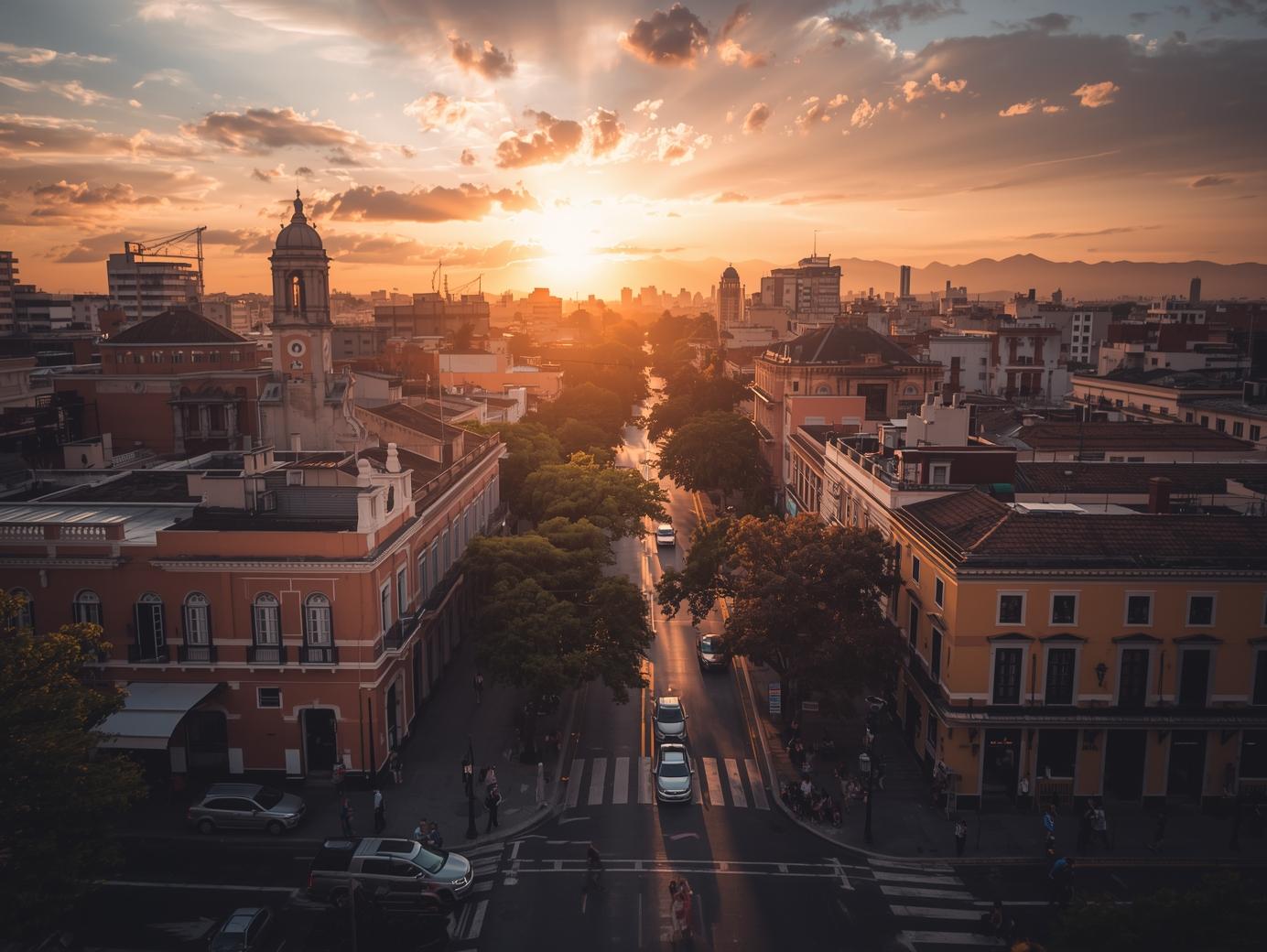
And then there is the physical city itself: beautiful in ways that are constantly surprising, with an architecture that moves from Art Nouveau to Brutalist to colonial baroque within the span of a few blocks, and parks and markets and street life that make ordinary movement through the city a continuous series of small pleasures. A city that is worth walking through is a city that produces encounters, and Mexico City is worth walking through.
“The best social infrastructure is the kind you do not notice — a city where interesting things happen not because they have been organized but because the conditions for them are simply always present.”
What CDMX Offers That Other Cities Do Not
Every world city has a specific quality that distinguishes it from the others, and Mexico City’s is a particular combination of scale and intimacy that is genuinely rare. It is a megalopolis of twenty million people that somehow contains, within neighborhoods like Roma Norte and Condesa, a social world that functions with the warmth and familiarity of a much smaller city. You begin to recognize faces within weeks. You acquire regular tables, regular coffee shops, regular routes through the neighborhood. The city becomes yours in a way that London or New York, for all their virtues, rarely do.
The Mexican social culture amplifies this. Hospitality is a genuine value here, not a performance. People are invited into homes, into family occasions, into the personal lives of new acquaintances, at a pace that is quite different from the social cultures of most North American and Northern European cities. For the person who arrives in Mexico City genuinely open to what it offers, the speed at which the city becomes inhabitable — the speed at which it produces real friendship, real community, and real romantic possibility — can be surprising.
There is also the question of pleasure. Mexico City takes the quality of immediate experience seriously in a way that accelerates social intimacy. When the default mode of social interaction includes extraordinary food, excellent mezcal, beautiful surroundings, and the expectation of conversation that is worth having, the conditions for genuine connection are simply better than they are in a city where efficiency is the primary social value.
A Note on Timing
The particular window that Mexico City is in right now is worth naming directly. Cities at the stage of development that CDMX currently occupies — globally recognized but not yet priced out, cosmopolitan but still distinctly local, attracting the interesting arrivals before the merely fashionable ones — have a specific and temporary quality. They are at their best for a finite period, before the economics of success make them inaccessible to the people who made them interesting in the first place.
Lisbon is probably past that window. Barcelona is approaching its limit. Mexico City is still in it, and by most indications will remain in it for several years more. For the person who is thinking about where in the world to invest their social and romantic energy — and who has the means and mobility to choose deliberately — this is not a trivial consideration.
The city is extraordinary right now. The people arriving right now are extraordinary. The social conditions are as good as they are going to get. That combination does not last indefinitely, and knowing when you are in the middle of it is itself a form of useful intelligence.
—————————————————
Join the Amari Club Waitlist
Amari Club connects exceptional men with extraordinary partners.
Apply for early access to our private membership network.
Join the waitlist at amariclub.com