
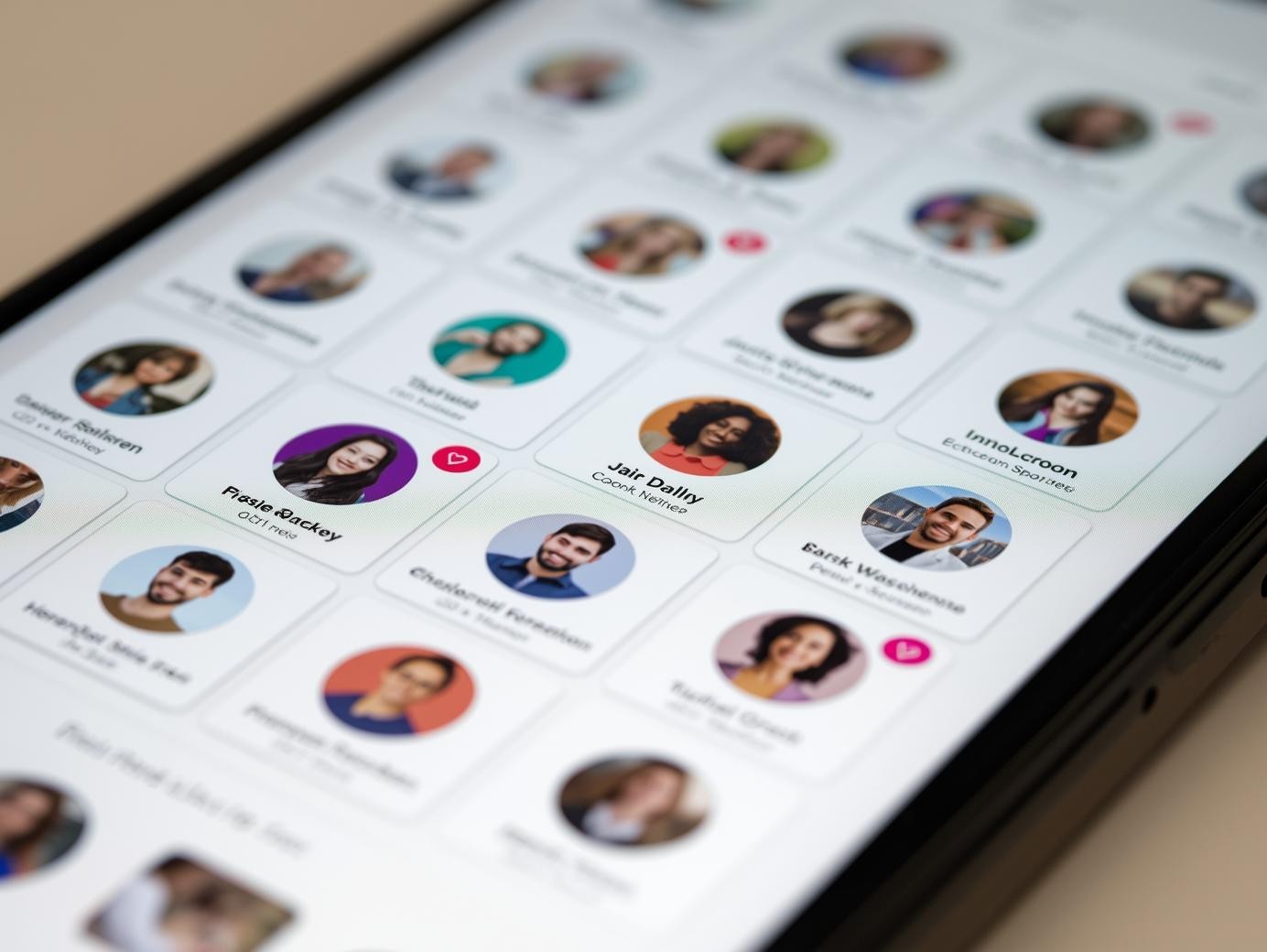
The Algorithmic Illusion: Dating Apps Were Never Built for People Like You
The frustration is nearly universal among high-achieving singles, and it tends to be described in similar terms across very different lives. The apps feel shallow. The conversations go nowhere. The people who seem promising, on closer inspection, turn out not to be. And the whole experience — the swiping, the matching, the brief exchange of pleasantries before everything fades — leaves a particular kind of residue: not just disappointment, but a vague sense that something is structurally wrong.
Something is. But the problem is not that the apps are failing. The problem is that they are working exactly as designed — and what they were designed to do has almost nothing to do with helping people like you find what you are actually looking for.
This distinction matters, because it changes the question. The question is not how to use dating apps more effectively. It is whether the underlying model is right for the life you are trying to build.
What the Algorithm Is Actually Optimizing For
Every product optimizes for something. The question is always: what, specifically, and on whose behalf. Dating apps optimize for engagement metrics — daily active users, session length, swipe frequency, return rates. These are the numbers that determine valuation, attract investment, and sustain the business. They are also, in every meaningful sense, at odds with the interests of the people using the product.
A match that leads to a lasting relationship represents, from the product’s perspective, a lost user. A user who is continuously hopeful but never quite satisfied is the ideal customer — they will pay for premium features, return repeatedly, and generate the engagement data that keeps the platform healthy. The business model is not secretly misaligned with user interests; it is openly, structurally misaligned in a way that most people do not examine until they have spent several years on the wrong side of it.
Understanding this does not require cynicism. It requires only reading the incentives accurately, which is something that most high-achievers are actually quite good at — in every domain except, for some reason, this one.
“A dating app that successfully matches you with a lasting partner has lost a customer. This is not incidental to the business model. It is the business model.”
The Profile Problem
There is a second, more fundamental issue with the algorithmic approach, and it has to do with what information is actually legible in a dating profile.
A profile can communicate physical appearance, professional status, stated interests, and the quality of someone’s self-presentation. These things are real signals, but they are also the most gameable, the most context-free, and the least predictive of the qualities that actually determine whether two people build something meaningful together.
What a profile cannot communicate — what no profile can communicate, regardless of how thoughtfully it is constructed — is how someone handles disappointment. Whether they are capable of genuine generosity when it costs them something. How their values manifest in actual decisions rather than abstract statements. What it feels like to spend a quiet evening with them. Whether they have the kind of interior life that makes sustained intimacy possible.
These are the things that matter most, and they are precisely the things that the profile format cannot carry. The algorithm therefore selects on the available proxies — appearance, status, self-presentation — and produces matches that are optimized for initial interest rather than long-term compatibility. For most people, this generates a parade of reasonably attractive, superficially interesting strangers who turn out, in practice, to share nothing essential.
The Illusion of Abundance
One of the more insidious aspects of dating apps is the way they reframe scarcity as abundance. The experience of scrolling through thousands of profiles creates the impression of unlimited possibility: there are so many people out there, and the right one must be among them. The psychological effect of this is subtle and corrosive.
Research on decision-making under conditions of apparent abundance consistently shows that more options do not produce better choices — they produce paralysis, dissatisfaction, and a persistent sense that whatever choice was made might be inferior to the alternatives. Applied to romantic partnerships, this manifests as a kind of perpetual optimization reflex: the suspicion that the next profile might be better, which makes genuine commitment to any current connection feel premature.
The abundance is, in any case, an illusion. The relevant pool — people who are genuinely compatible, appropriately situated in life, and actually interested — is not large. It has never been large. The apps create the impression of scale while doing nothing to improve the quality of what is actually available, and the combination tends to produce the worst of both worlds: endless choice without meaningful options.
“The paradox of choice is not an abstract concept in modern dating. It is the defining experience of an entire generation of capable, serious people who have been given access to thousands of profiles and genuine connection to almost none of them.”
Why Volume Is the Wrong Variable
If the problem is not a shortage of potential partners in the abstract, but a shortage of the right conditions for genuine connection, then increasing the volume of available profiles is solving the wrong problem.
What actually produces meaningful romantic outcomes is not scale but context. The environment in which two people encounter each other shapes, profoundly, who they are in that encounter and what becomes possible between them. Meeting someone through a trusted mutual connection carries implicit validation and shared reference points. Meeting someone at a gathering of people with similar values and comparable levels of accomplishment creates a baseline of common ground. Meeting someone at a private event hosted around a specific interest or aesthetic creates an immediate frame for real conversation.
These contextual advantages are not incidental. They are the mechanisms by which genuine connection has always formed. The great irony of the dating app era is that it stripped away context — the thing that actually produces connection — in the name of efficiency, and produced a system that is maximally efficient at generating superficial interaction and minimally effective at producing anything deeper.
What a Better Model Looks Like
A model designed actually around the interests of serious people would look quite different from what the major apps offer. It would be selective by design, because the quality of a network is determined by who is in it and the only way to maintain quality is to curate carefully. It would prioritize context — real social environments, shared values, human judgment — over algorithmic matching. It would value discretion, because the people for whom the stakes are highest are often the ones most exposed by participation in public-facing platforms. And it would be designed around the goal of lasting connection rather than engagement metrics.
This is not a novel idea. Private members clubs, curated dinner series, invitation-only social networks: these structures have existed for precisely this reason, in various forms, for most of recorded human history. What is new is the possibility of applying the same principles to the specific challenge of finding a genuine romantic partner, at the level of quality and discretion that the most accomplished people actually need.
The algorithmic model will continue to serve the majority. It is efficient at what it does, and what it does is sufficient for most purposes. But for the people for whom it has consistently failed — the ones for whom the standard model has never quite been the right fit — the recognition that the problem is structural rather than personal is actually a useful starting point. Because structural problems have structural solutions, and those solutions do not require you to change what you want. They require a different place to look for it.
——————————————
Join the Amari Club Waitlist
Amari Club connects exceptional men with extraordinary partners.
Apply for early access to our private membership network.